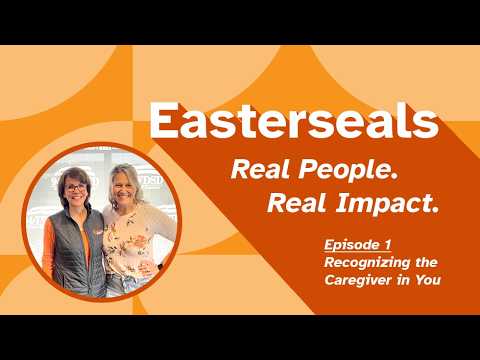
Christa Cooper: Hey, this is Chris Cooper, and I'm here with our good friends at Easterseals for a series called Easterseals: Real People, Real Impact. I'm here with Nancy Ranalli, Director of Community Outreach at Easterseals. How are you?
Nancy Ranalli: I'm great. How are you, Christa?
Christa Cooper: I'm doing good. We've got a lot to cover today and a very important topic. We're going to be talking about recognizing the caregiver in you.
To start off, I got to thinking that a lot of people might be listening right now and thinking, "Well, that sounds like me, but I don't know if I'd give myself that title." So let's break it down in a way that feels relatable and real to the people listening. What would you consider a caregiver?
Q: What would you consider a caregiver?
Nancy: Really, anybody who is caring for a loved one. It could be a relative, a parent, a neighbor—somebody they're doing things for because that person needs some help.
And you're right, lots of people don't consider themselves caregivers. They're like, "Well, it's my mom. I should take care of her. It's my dad," or whatever. Sometimes that prevents them from getting the resources that are out there.
Once they realize that they are a caregiver, they can understand that there are supports and resources to help them. It's great that they say, "I want to take care of my loved one," but that doesn't mean you have to do it alone, and it doesn't mean that you can't ask for resources.
It doesn't mean that you're weak or that you don't love your parent. It just means, "Help me do this the best I can."
Christa: Easterseals—and we'll get to some of this—has those resources for those people. Really, it comes down to acknowledging the fact that you don't have to do this alone.
Nancy: Absolutely.
Q: Why is it important to recognize that you're a caregiver, and what should someone do next?
Nancy: Realizing that you're a caregiver may happen because your mom just got a diagnosis of dementia, your uncle had a stroke, or your adult child has a brain injury. Then it's, "Now what do I do?"
There are lots of supports for that. There are caregiver resource centers across the state, and Easterseals is fortunate to have two of those.
It's really for caregivers to call and say, "What do I do now? What resources are out there for me?" The case managers will provide information about different things in the community that might be helpful—not just Easterseals resources, but things the state might have and things that other community organizations might offer that can really help that person on their caregiving journey.
There's lots of education out there for caregivers, too. Easterseals always has our annual Caregiver Conference. It's a free conference, and caregivers can come, talk to other caregivers, learn about resources in the community that might be helpful, and really get support from each other.
Christa: I think the support is a big part, too—knowing you're not alone.
Nancy: Yes.
Christa: If somebody asked you to change the oil in your car and you didn't know how to do it, you'd go find help, right?
Nancy: Right.
Christa: In the same sense, you might not know the resources or support you need to be a caregiver.
Nancy: Exactly. It sure does.
Why would you expect to suddenly know how to take care of somebody with dementia? You've never dealt with that before. Asking for help is great, and those resources are out there.
Q: What happens when caregivers realize support is available?
Christa: I'm sure even in that moment, when they realize they're a caregiver and they're ready to take the next steps, that's got to feel like a relief—a weight off their shoulders—to know the support is out there.
Nancy: Absolutely.
It's so rewarding for us when we meet with caregivers at an event or talk to them on the phone and provide resources. You're absolutely right—you hear the relief in their voice. They realize, "Okay, there is something out there for me."
Support groups are really important, and lots of people don't want to do that at first. But being able to talk to other caregivers who are in the same situation as you is incredibly helpful.
You can talk to your friends, but if they're not caregivers, they're not always going to understand what you're going through. To be able to talk to another caregiver who says, "Yes, I'm frustrated too," or "I had that problem, and this is what I did," is so helpful.
Q: What is respite care, and why is it important?
Christa: Let's touch on respite care. That's a great resource.
Nancy: Caregivers spend so much time caring for their loved ones that they don't take care of themselves. They don't take that break just to breathe.
Sometimes people don't take a break until they get sick themselves or they're at the end of their rope.
There are resources out there to help people get a break. Medicare, Medicaid, and the VA all have respite resources, but lots of people don't qualify for them.
Easterseals has Delaware's Lifespan Respite Program, so people can get a break. We have vouchers that allow caregivers to have a friend or neighbor come watch their loved one while they take some time for themselves.
And that break can be something as simple as walking around the park or taking an uninterrupted bath. It doesn't have to be big, grand plans.
Christa: To your point, it's so rewarding to be a caregiver, but you also have to take care of yourself.
Nancy: Absolutely.