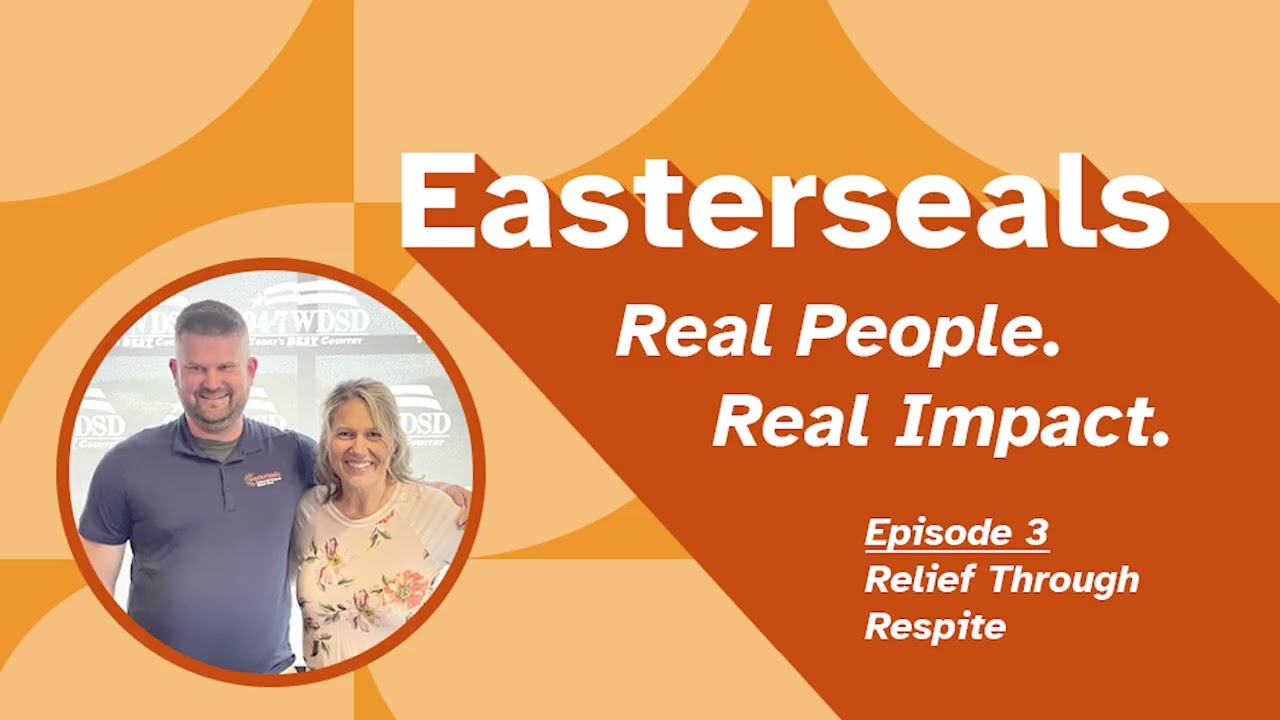
Christa Cooper:
Hey, this is Christa Cooper, and I'm here with my good friends at Easterseals for a series called Easterseals: Real People, Real Impact. I'm here with John Swartz. He's the Respite Coordinator with the Community Outreach Program.
Today's conversation is all about something every caregiver needs, but not everyone feels comfortable taking—relief, right?
So let's start with the basics, because respite might sound, even to me, like a formal term. But it's very human. It's very natural.
Let's talk about it. What is respite?
John Swartz:
You're right. The term respite throws a lot of people off, but it's something very simple. It's just taking a break when you need it—something that gives a caregiver a break.
That looks different for different people. It can be something like taking a walk, having a cup of coffee, getting a haircut, maybe taking a weekend away, or just taking a few hours to yourself.
It has to be intentional. I know a lot of caregivers tend to forget it. They say, "I know I need that break, but I'll take it when I take it," and they forget to put it on the calendar.
It's really designed to help them recharge and re-energize so they have the time and energy to care for their loved one.
Christa:
Yeah. I think in this series we've talked a lot about the importance of taking care of yourself when you're taking care of a loved one.
Sometimes that first step is hard, right? But once people experience that moment, they're like, "Oh yeah." It's a breath of fresh air.
John:
I get a lot of calls from people who say, "I didn't realize I needed this. I'm glad that I took it."
Christa:
Yeah, absolutely. I know Easterseals plays a big part in that.
How can a caregiver access respite? And are there any special qualifications to receive funding for respite if they need that type of support?
Q: How can caregivers access respite?
John Schwartz:
Sure. There are a variety of ways to get respite.
Some people might be enrolled through Medicaid or Medicare or receiving services through the VA. I would encourage them to contact their coordinator through those services.
But a lot of times, people fall through the cracks. They don't qualify for any of those programs, so they really don't know where to start. That's where I step in.
My program is designed as a respite voucher in partnership with the Division of Aging, and we have two of them.
One, technically called our Lifespan Program, is designed for people caring for loved ones who have a diagnosis of dementia, Parkinson's, or Alzheimer's, or for caregivers who are 55 or older, or caring for someone who is 60 years of age or older. Those are the qualifications for that program.
Then we have another program designed to help relatives, grandparents, or anyone in a non-parent relationship who may be caring for a niece, nephew, or grandchildren. Maybe they're in their 70s or older and caring for grandkids.
The children don't have to have a disability. They just need to say, "Hey, I need a break. I took on this role later in life, and I need some support."
The voucher can be used for summer camp, day programs, or whatever the individual needs to help care for those children so they can get a break and continue serving those kids well.
Christa:
Yeah. So it's nice to know there isn't just one avenue. You've got a couple of different programs depending on each person's situation.
Is Easterseals working on any projects currently?
John:
We have a lot of services for caregivers, but we realized through our respite grants and voucher program that we weren't really meeting everybody where they were.
One of the things we've done is partner with the Division of Aging and two local faith communities—one in New Castle and one in Middletown—to create what we call congregate respite.
That means they have one day a week. One program meets on Saturdays, and the other meets on Tuesdays twice a month.
Participants are with people who are in a similar stage of life, and we have volunteers who provide activities, games, food, and companionship. The goal is to allow caregivers to leave their loved one for a few hours so they can go shopping, sit in the park, or maybe just do nothing. They can sit in the silence of their house and think, "This is awesome."
That's what we're working toward. We want as many people as possible to know we have a variety of services available.
In my hometown of Smyrna, we also have the Musical Memory Café at the Smyrna Opera House.
I believe it meets on the third Wednesday of each month—check the Smyrna Opera House website to confirm.
Again, it's designed for people living with conditions related to aging, including dementia and Alzheimer's, to come together. They provide free food, which is always a plus, and there's live music, usually from the '50s, '60s, and '70s.
It's really a sweet time. I've watched people come in who are battling the early stages of dementia or Alzheimer's. They're nonverbal and struggling to respond to their loved one, but the minute the music starts, you see them perk up. They begin dancing and moving. It's amazing.
If you haven't been to one, just stop in and check it out.
Christa:
You know my heart, and just being around those different avenues of support and that setting, I'm sure being able to relate and connect with other people has to be huge.
John:
Oh yeah, definitely. That common connection is something caregivers need too—just knowing they're not alone. There are other people going through the same thing, and they can do it.
Christa:
Absolutely. I think looking at it this way, respite isn't a luxury. It's a necessity.
John:
It is.
Imagine you're sinking in the ocean. Respite is your life preserver. It pulls you onto the boat so you can catch your breath, get your bearings, and keep going.
Christa Cooper:
Yeah. I think the hardest part is just taking that first step.
But to your point earlier, once you do it, you realize just how much you benefit.
John:
You'll think, "Wow, I didn't know I needed this." And then you'll want more of it—and you deserve it.
Christa:
For anybody looking for more information on the programs you mentioned or for more support, where can they go?
John:
You can go to the Easterseals website. Explore the tabs, visit the caregiver support resources, give me a call, or send me an email, and we'll have a conversation.
Christa:
Awesome.
John, thank you so much for sharing this great information.
Relief through respite with John Schwartz, the Respite Coordinator with the Community Outreach Program at Easterseals.