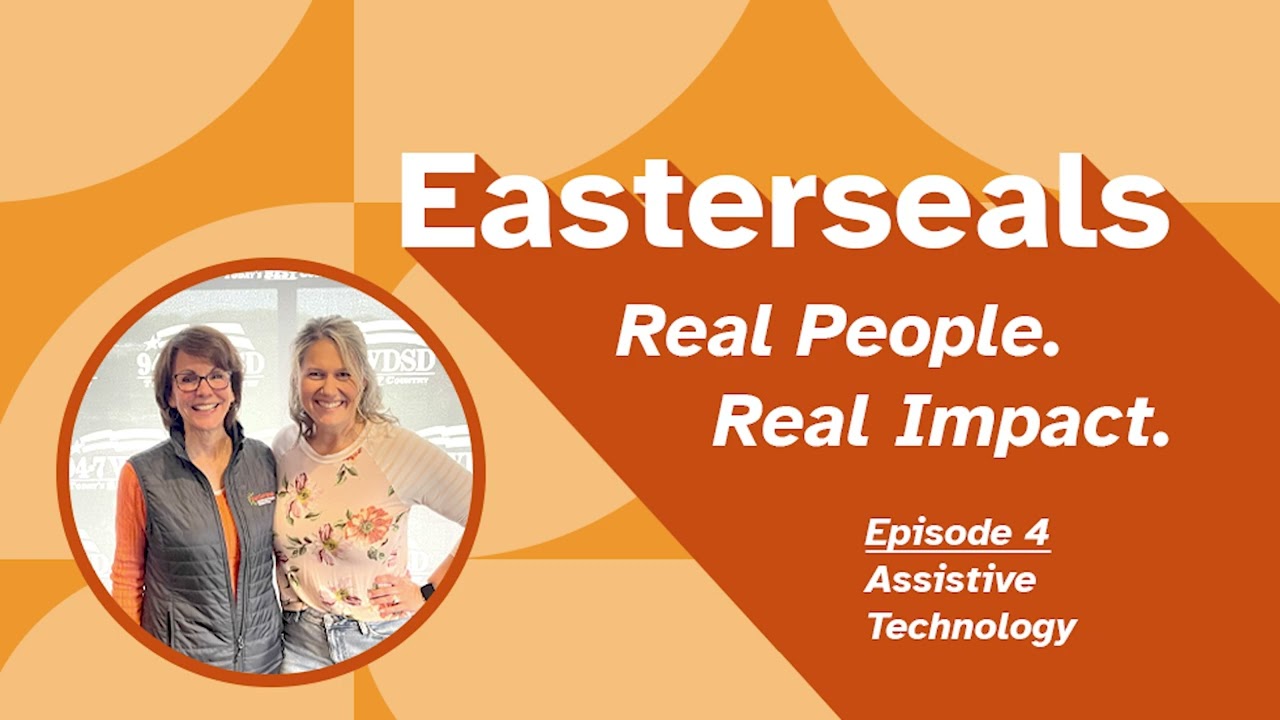
Christa Cooper: This is a series called Easterseals: Real People, Real Impact with my good friends at Easterseals. I'm here today with Nancy Ranalli. She's the Director of Community Outreach. Nancy, how are you?
Nancy Ranalli: I'm doing great. How are you?
Christa: I'm doing well. Today we're talking about assistive technology—what it is and how people can get it.
It's something that can truly change day-to-day life for both caregivers and their loved ones. So let's break it down from the beginning.
Nancy: The term can sound a little intimidating. People tend to think of really high-tech devices, but it doesn't have to be.
I like to think of assistive technology as tools for independence. There are things that help someone do everyday tasks more independently and more easily. When that happens, it can also save the caregiver time.
Assistive technology can range from elastic shoelaces and weighted utensils to voice-activated controls that open curtains or turn on a fan—and everything in between.
It can benefit people of all ages with a variety of disabilities. There are magnification systems for people with vision loss, devices that amplify sound for those with hearing loss, and adapted clothing like shirts, pants, underwear, shoes, and jackets that help people with mobility challenges. The list really goes on and on.
Christa: I'm sure it does. And Easterseals has some resources available, right?
Nancy: We do. We have about a 3,000-square-foot Resource Center at our New Castle location filled with assistive technology, and people can come in, look around, and learn about what's available.
We don't sell anything, and we don't receive commissions on any of the products.
Often, someone will come in and say, "My dad had a stroke and is having trouble eating. Are there tools that can help?" There certainly are, but because they've mentioned a stroke, we also know they may be having difficulty with dressing, bathing, and other daily activities. So we can introduce them to a variety of solutions they may not have known existed.
Christa: I remember touring that space. For someone who may not be able to make it there, do you offer a virtual option?
Nancy: We do. We offer live virtual tours, so it's not just a recorded video.
We can set it up through Teams or Zoom, walk through the Resource Center with them, answer questions, and even zoom in on products they want to see. It's just like being there in person.
Christa: That's a great option for people who aren't able to leave home.
Q: How does assistive technology help caregivers day to day?
Nancy: It really helps in two ways.
First, it restores some independence and dignity for the person receiving care, and that's incredibly valuable.
Second, depending on the tool, it can save caregivers time.
For example, a shirt with magnetic closures instead of buttons may allow someone who's had a stroke to get dressed independently. That means the caregiver can focus on getting themselves ready instead of helping with every step.
Or someone can use an Amazon Alexa or Google Home device to turn on a light or fan using their voice, a tablet, or a phone. Instead of stopping what they're doing to help, the caregiver can continue making breakfast while their loved one controls the environment independently.
So it really helps in both ways.
Christa:: Right. It saves time while also promoting independence. Those really go hand in hand.
Q: Is assistive technology covered by insurance?
Christa: A lot of people are probably wondering about the cost. Can they afford it? Does insurance help cover assistive technology?
Nancy: For some things, yes. Medicare or Medicaid may help pay for bathroom modifications, walkers, wheelchairs, and similar equipment.
But they typically don't cover things like medication reminders, adapted clothing, or many lower-tech items.
We also host an annual open house where people can come in and see these products. Sometimes they're looking for a Father's Day gift and realize Grandpa is having trouble buttoning his shirt. An adapted shirt can actually make a wonderful and very practical gift.
Christa: I bet people don't even think of those things as gifts.
Nancy: They don't. Sometimes people say, "Oh, I don't need that," but when a grandchild gives it to them, they're much more likely to use it.
For larger items like stair lifts, ramps, or home modifications that aren't covered by insurance, we also offer a financing program called FYI Financial Independence.
We work with two lenders to help people receive lower interest rates, which can make those larger purchases much more affordable.
Christa: That's great information to share because it lets people know these resources really are within reach.
To your point, assistive technology can save caregivers time while helping their loved ones maintain independence.
Q: Where can people learn more about assistive technology?
Christa: For anyone who wants to tour the Resource Center or learn more about assistive technology, where should they go?
Nancy: They can visit our assistive technology page, and we'd be happy to help them.
Someone once said to me, "For most people, assistive technology makes things easier. For someone with a disability, it makes things possible."
Christa: I love that. It really does hit your heart because it's so true.
Knowing these resources are available can make all the difference.
Nancy, thank you so much for sharing this information.