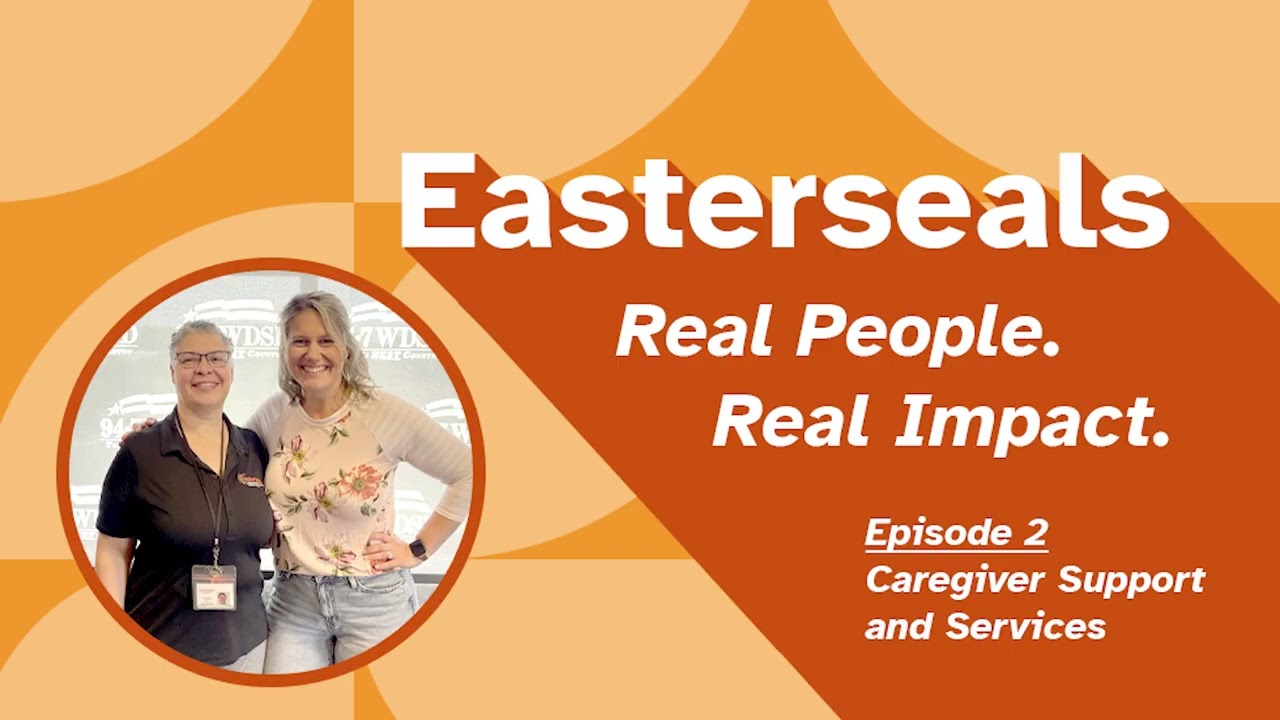
Christa Cooper: This is a series called Easterseals: Real People, Real Impact with my good friends at Easterseals. I'm here today with Crystal Baynard. She's a Case Manager for the Community Outreach Program. Crystal, how are you?
Crystal Baynard: I'm well. How about yourself?
Christa Cooper: I'm doing good. Today we're talking about caregiver supports and services—that moment when caregiving gets hard.
It's such an important conversation because there are a lot of people out there who are caregivers helping their loved ones, but at what point does that take a toll on yourself? We're going to dive into that, and I know you've got some good tips for caregivers who are listening.
Q: What should caregivers do when they're feeling burned out or exhausted?
Crystal Baynard: I think when you get to the point where you're just super exhausted, it's important to take a moment and understand that there can be good days and rough days in this journey.
If you're having difficulties like trouble sleeping, poor concentration, overeating, or skipping meals, those can be signs that you're getting burned out and need a break.
Understand that you're going to need breaks during this journey and try to schedule them whenever possible. It could be short breaks, like going for a walk, reading, or listening to music.
Sometimes having something on the calendar for yourself to look forward to can really help. Just being able to look at your calendar and say, "Okay, next Friday I'm going to have lunch with my friend," can help you get through those rough days and challenging moments.
Try to eat well. Stress can cause changes in your eating habits or cravings that can actually make stress worse if they're overdone.
And even though it can be challenging, try to laugh sometimes.
Christa Cooper: Oh my gosh, laughter is the best medicine.
Crystal Baynard: Sometimes it really is. Laughter can actually release things in your body that help you feel better in the moment.
Be sure to ask for help when you need it, and be specific. When someone says, "What can I do to help?" it's okay to tell your neighbors or friends exactly what would help.
You can say, "It would really be great if you could stop by next Tuesday and sit with my loved one while I take a walk or go shopping."
If you don't have resources such as family, friends, neighbors, or others who can assist you, reaching out to an agency or organization is a good idea.
Easterseals has two different respite grant programs that caregivers can use to get a break. One is for caregivers caring for loved ones, and one is for relatives caring for minor children through guardianship or other situations, so they can schedule time for themselves.
We also have our Caregiver Resource Center, where caregivers can find information about community resources specific to their area and their needs.
Christa Cooper: That's such a good point for people who may not have help from neighbors or friends. It's important to know that Easterseals has those resources and respite grants available.
To your point, it's so important to take care of yourself and take a break. I also like that you mentioned putting something on the calendar. That can make all the difference, just knowing you have something to look forward to because your happiness matters too.
Crystal Baynard: We do everything for our loved ones, right? Scheduling something for yourself on that same calendar with doctor's appointments and medication reminders can give you something positive to anticipate.
I know people may be thinking it's hard to get away, but that's exactly why we're having this conversation—to encourage people to understand that taking time for themselves is important.
Q: How can caregivers build resilience?
Crystal Baynard: Building your community is important.
Learning about your loved one's disease or diagnosis can also help you know what to expect. Sometimes understanding the challenges that are part of the disease process can lower stress and build resilience.
For example, with dementia, certain health conditions can cause our loved ones to act differently or behave in ways that are challenging. Knowing that it's the disease process and not something personal can make it easier to cope.
Finding ways to express your feelings can also be very helpful.
A lot of people experience feelings of frustration, guilt, anger, and sadness while caring for a loved one. Those are all normal feelings under the circumstances.
Recognizing those feelings and understanding that they're normal can help.
Releasing those feelings through music, journaling, exercise, or other activities can be beneficial. Sometimes talking with a therapist or participating in a support group can also be very helpful.
People sometimes hear the words "therapist" or "support group" and have their own opinions about them, but support groups can be a great way to connect with others who are going through the same caregiving journey.
Easterseals has a very active support group where caregivers can learn about resources and support one another. It's a great way to connect with others.
We offer four different opportunities each month for people to participate either virtually or in person.
Christa Cooper: That's awesome.
Crystal Baynard: Whatever works for your schedule. You can participate as frequently or as infrequently as you'd like.
It's important to give yourself a break. Don't focus too much on the things you forgot to do or the moments when you feel like you didn't say or do the right thing.
It's okay if some tasks don't get done as often as they used to. Take each moment as it comes and remind yourself that you're doing the very best you can for yourself and your loved one.
Q: What daily routines or small changes can make caregiving more manageable?
Christa Cooper: I think there could be someone listening right now who knows that feeling of saying, "I'll take that break later," but then later never comes.
That's why it's so important to understand the resources that are available, build resilience, and seek support.
Q: What are some daily routines or small changes that can make caregiving a little more manageable?
Crystal Baynard: Again, it's really important to take time for yourself every day if possible.
It can be simple things. You can drink that cup of coffee—or better yet, take a moment to actually enjoy that cup of coffee.
Christa Cooper: I love that.
Crystal Baynard: Give yourself a treat. If you're grocery shopping and picking up items for your loved one and you see flowers on sale, buy the flowers. Pick up that magazine you've been wanting to read and spend a few minutes enjoying it with your coffee.
Take a short walk and get outside.
Consider options that can help you in the home, such as assistive technology or adaptive equipment. These tools can make daily tasks easier for caregivers.
Easterseals has a large showroom of assistive technology and adaptive equipment that can help give you ideas about things that may make caregiving easier at home.
Another helpful change is allowing someone else to help you. Let someone run errands or do the grocery shopping. That gives you one less thing to focus on that day.
And learn to let go.
Focus on what's most important, which includes you—especially on difficult days.
Accept that it's okay if you don't clean the house as often as you used to, maintain the yard the same way, or do the dishes after every meal.
Things don't have to be done the way they were before. Approach daily tasks in the way that works best for you as the caregiver while taking care of yourself and your loved one.
Christa Cooper: To your point at the beginning of this conversation, just take a breath.
Crystal Baynard: Yes.
Christa Cooper: Caregiving truly is an act of love, but it shouldn't come at the cost of your own well-being.
Crystal Baynard: Absolutely.
Christa Cooper: That's why this conversation is so important. Taking care of yourself is part of taking care of someone else.
Crystal Baynard: It is. It's a very important part of taking care of your loved one.